
2026-10-17 ·
Roof Leak Repair or Roof Replacement? What to Consider After a Storm in Wichita Falls, TX
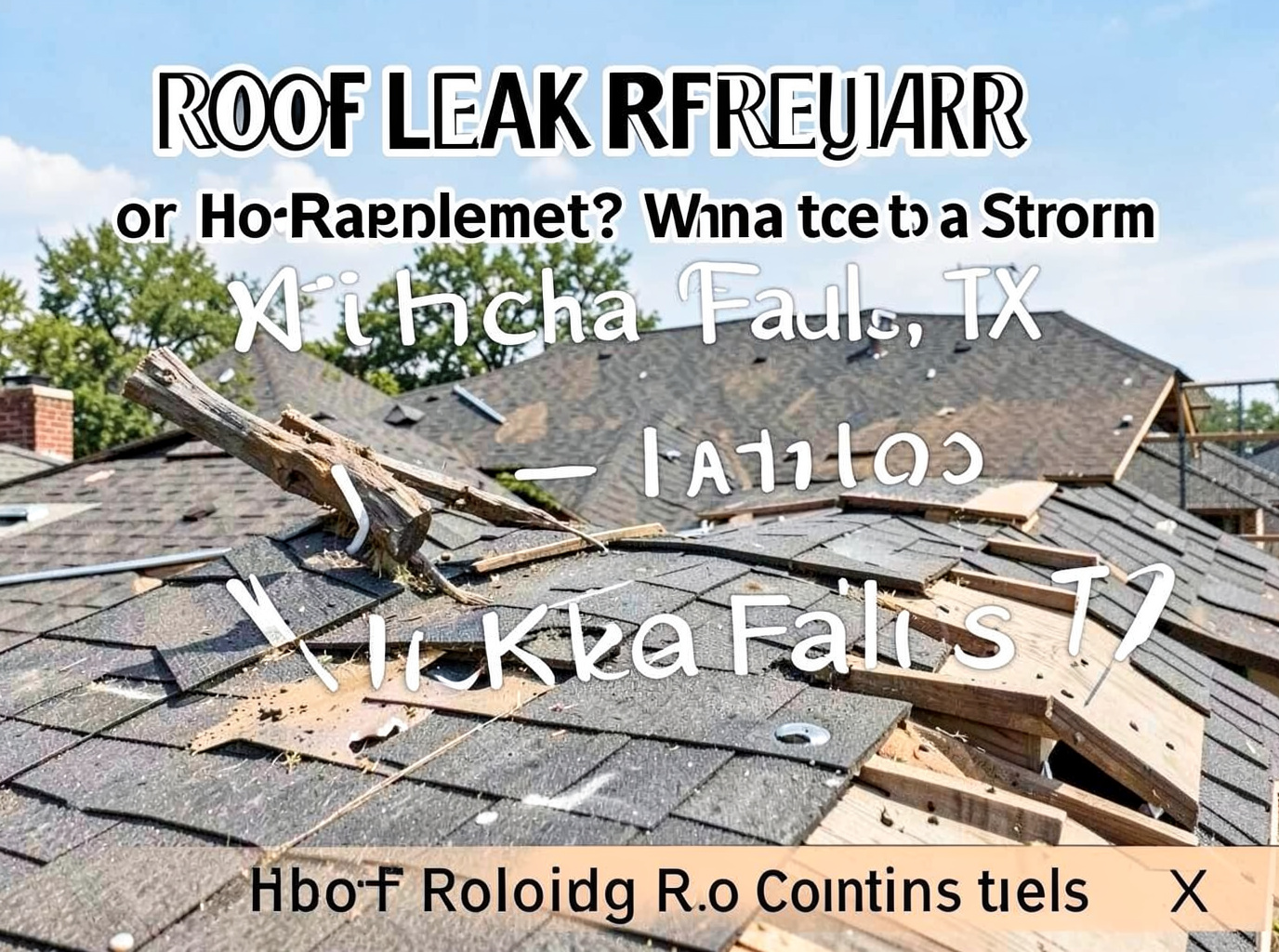
After a storm in Wichita Falls, the decision between roof leak repair and replacement hinges on the extent of damage to the roof deck, underlayment, and structural integrity rather than the number of visible leaks alone. High winds common to Wichita County can lift shingles across older homes in Downtown Wichita Falls and Southside neighborhoods, while hail often punctures asphalt on properties near Lake Wichita. A thorough inspection reveals whether localized fixes will hold or if widespread deterioration from prior heat cycles requires full replacement.
Evaluating Storm Damage on Local Roofs
Wichita Falls experiences sudden wind gusts that can tear flashing around chimneys and vents on homes built before the 1980s in University Park and near the Kell House Museum. These older structures often feature original decking that softens after repeated exposure to cold winter snaps followed by rapid spring warming. Homeowners should check for soft spots by walking the attic and noting daylight through the deck, as these indicate when repair alone cannot restore load-bearing capacity. Properties in Burkburnett and Henrietta face similar wind-driven rain that pools at valleys, accelerating rot in unvented spaces. Checking for granule loss in gutters provides another ground-level clue before deciding on scope.
Local Climate Effects on Repair Decisions
Hot summers in Wichita County bake shingles, making them brittle so that even moderate post-storm winds create new entry points for water. Cold winters then contract metal components, loosening seals around pipe boots on homes near Memorial Auditorium. When leaks appear only after one event, repair may address the immediate breach, yet repeated high-wind seasons often expose cumulative fatigue across entire slopes. Southside homes with mature trees face additional debris impact that can mask deeper deck damage until interior staining appears. These patterns mean owners must weigh short-term leak sealing against the likelihood of follow-up calls within two to three seasons.
When Roof Leak Repair Addresses the Issue
Targeted roof leak repair works when damage stays confined to one or two slopes and the deck remains sound. Crews can replace individual shingles, reseal flashing, and add new underlayment strips without disturbing the rest of the system. This approach suits homes in Floral Heights where recent wind events affected only ridge lines. Documentation from an inspection helps confirm that no widespread granule shedding or interior moisture extends beyond the repaired zone. Owners in Lawton who commute to Wichita Falls often choose this route first when insurance adjusters note isolated impact points rather than field-wide failure.
When Replacement Becomes the Practical Choice
Full replacement enters consideration once damage covers more than 30 percent of the roof surface or when multiple layers already exist beneath the current shingles. Homes along Southwest Parkway frequently show deck delamination after successive storms because earlier repairs never addressed underlying ventilation shortfalls. Storm damage roof repair crews note that attempting repeated patches on aged asphalt leads to mismatched materials and ongoing interior issues. Replacement also allows upgrades to wind-rated underlayment suited to the county's gust patterns. Properties near River Bend Nature Center benefit from this reset when existing shingles have lost flexibility from decades of temperature swings.
Next Steps After Inspection
Schedule a roof inspection after a storm before any work begins so measurements and photos guide the scope. Compare the cost of multiple localized repairs against a complete tear-off by factoring in future wind exposure in East Wichita Falls. Review the related guide on how to spot hail and wind damage to prepare questions for the visit. Decisions made with these details keep both repair and replacement options aligned with actual conditions rather than assumptions.